

The Cactus Blossom looks like a fun thing to split, and then you see the calorie count. It can blow through a budget faster than most burgers do, and plenty of people don’t see it coming.
It’s meant for the whole table, not one person. You’ll also see a few different numbers online. Here’s why they don’t match and what they mean once the plate lands.
How many calories are in a Texas Roadhouse Cactus Blossom?
The most common estimate you will see is about 1,700 calories for the appetizer. Still, current listings and nutrition trackers often go higher, especially when the dipping sauce is included. As of May 2026, the range most often shown online is 1,700 to 2,250 calories.
Here’s a quick way to look at those numbers:
| Estimate | What it may include |
|---|---|
| About 1,230 | Older listing, smaller portion estimate, or incomplete entry |
| About 1,700 | Fried onion without counting every sauce detail |
| About 2,250 | Full order with Cajun sauce, as listed on some current menu pages |
So, even when the total shifts, the bottom line doesn’t. This appetizer is always a high-calorie order.
Why the calorie number can look different in different places
You may see 1,230, 1,700, or 2,250 because nutrition databases don’t always track the same thing. Some entries count the onion alone. Others include the Cajun horseradish sauce. Older menu data can also stay online long after a restaurant updates its numbers.
If you want broader context, this roundup of Texas Roadhouse nutrition facts by category shows how the Cactus Blossom stacks up against other starters and entrees. No matter which number you use, it is still one of the heavier items on the menu.
What a full serving looks like
A full Cactus Blossom is a large onion cut into petals, battered, and deep-fried until crisp. It is made for the table, not one person. Some trackers list the serving at around 14 ounces, or roughly 400 grams, which helps explain why the calories climb so fast.
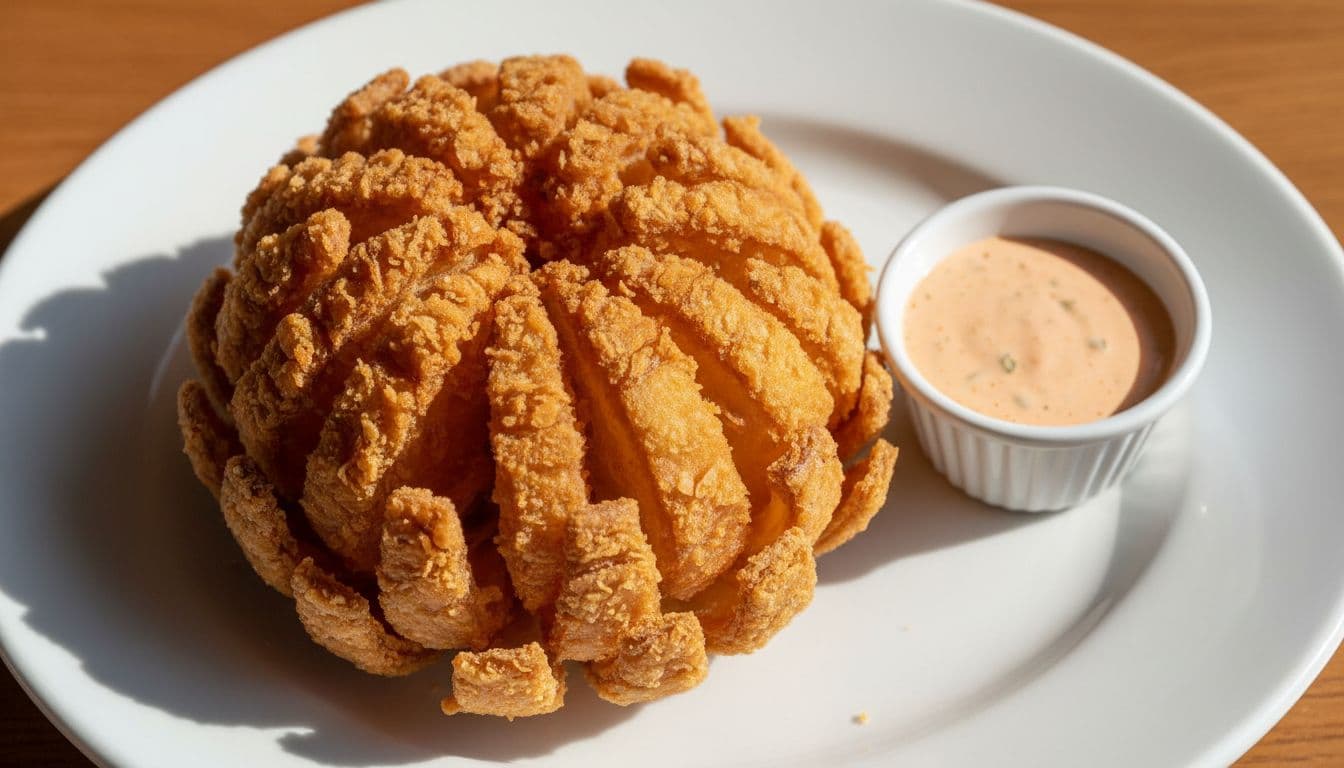
When you see it on the plate, the portion tells the story. This is closer to a shared fried platter than a small appetizer.
What is really driving the calories so high?
The onion itself is not the problem. A plain onion would be modest in calories. The trouble starts with the coating, the fryer oil, and the sauce that comes with it.
The fried onion and batter add up fast
Most of the calories come from the breading and deep-frying. The batter brings in a lot of refined carbs, and frying adds a large dose of fat. Because the onion is cut wide open into petals, there is more surface area for coating and oil.
That is why the dish feels so light and crisp, yet lands so hard on the calorie count. You are not eating one onion in the way you would at home. You are eating a heavily breaded, oil-soaked appetizer designed to taste rich.
The dipping sauce can add even more calories and sodium
The sauce is easy to overlook because it comes in a small cup. Still, creamy dips pack a lot into a few spoonfuls. The current Texas Roadhouse Cactus Blossom menu listing shows 2,250 calories for the full order and notes that it is “great for sharing.”
Sauce also pushes the sodium higher. So if you keep dipping every petal, the total rises fast. Ranch or extra creamy dips can have the same effect.
How the Cactus Blossom fits into a day of eating
Calories tell part of the story, but the rest of the nutrition matters too. This appetizer is heavy in fat and carbs, very high in sodium, and low in protein for the amount of energy it delivers.
A quick look at fat, carbs, and sodium
Most nutrition entries put the Cactus Blossom around 89 to 135 grams of fat, well over 200 grams of carbs in the highest listings, and only 12 to 25 grams of protein. In other words, you get a lot of calories without much staying power.
Sodium is where this order really jumps out. Current online estimates place it at roughly 5,000 milligrams or more, which can exceed a full day’s recommended limit in one appetizer. This nutrition entry from Eat This Much gives a good snapshot of that macro split.
Who may want to be extra careful with this appetizer
If you’re watching calories, sodium, or saturated fat, this is one to approach with care. The same goes for anyone trying to keep blood pressure in check or avoid a heavy, sluggish meal before even reaching the entree.
That doesn’t mean you can never order it. It means this item works better as an occasional treat than a routine starter. For many people, the issue is not the onion itself, but the size and the build of the dish.
Smarter ways to enjoy it without overdoing it
You do not have to skip it forever. A few small choices can make a big difference without taking the fun out of the meal.
Share it with the table and stop at a few petals
The easiest fix is also the best one: split it. If four people share a full order, each person gets a much more reasonable portion. A few petals give you the flavor and crunch without turning the appetizer into a full meal.
The Cactus Blossom makes the most sense as table food, not a personal starter.

That simple move can cut hundreds of calories, and often more than a thousand.
Ask for sauce on the side and pair it with a lighter meal
Sauce on the side helps because you control how much you use. A light dip on a few pieces is different from coating every bite. After that, balance the rest of the meal with grilled chicken, a plain baked potato, steamed vegetables, or another lighter option.
If you order the Blossom, it also helps to skip extra high-calorie add-ons. A heavy appetizer plus buttery rolls, fries, and a rich entree can pile up fast.
Conclusion
The Cactus Blossom is heavier than it looks. Depending on the source, it runs from about 1,700 to 2,250 calories, with a lot of fat and very high sodium.
Split it, and go easy on the sauce. A few petals will handle the craving. A whole order for one person can eat most of your day’s calories before the entree even shows up.